Bedding · Linen guide
Naturepedic Organic Linen Sheets: Certification, Sourcing, and Care
A bedsheet can seem like a simple thing: a rectangle of cloth, a few seams, an elastic edge. But its story begins in a field, continues through a mill, and arrives in the bedroom bearing a label whose promises are worth understanding. Naturepedic organic linen sheets offer a useful case study in how fiber origin, textile certification, construction, and care fit together—and where each detail stops short of telling the whole story.
A sheet is more than its fiber
Linen begins with flax, a plant cultivated for its fibers and seeds. Once the stalks have been processed and the fibers prepared for spinning, those fibers become yarn; the yarn is woven into cloth, which may then be washed or finished before it is cut and sewn into bedding. Each stage can affect the finished fabric. “Linen,” therefore, identifies the fiber and textile tradition, but does not by itself tell a shopper where the flax grew, how the cloth was made, or which treatments it received.
Those questions matter because material names and origin descriptions answer different things. A statement that flax was grown in France identifies the agricultural origin of the fiber. It does not necessarily mean that every later step—spinning, weaving, dyeing, finishing, and sewing—also happened there. A statement that linen was woven in Portugal describes a manufacturing stage, not the field where the flax was cultivated.
For Naturepedic’s organic linen sheets, the available product information describes flax grown in France and linen made in a GOTS-certified organic facility in India. It also identifies the fabric as 185 grams per square metre and GOTS certified. These facts make the sheets a useful example of why it helps to read a product description as a map of separate stages, rather than as a single, sweeping claim about origin.
The collection’s specifications and care guidance can be reviewed on the Naturepedic Organic Linen Sheets product page. Details such as available sizes, fitted-sheet pocket depth, set contents, and care instructions should always be checked against the listing for the particular item being considered; bedding descriptions can vary across products and over time.
What GOTS certification means
GOTS stands for the Global Organic Textile Standard. It is a certification system for textile products made with organic fibres, with requirements that extend beyond the identity of the plant fibre itself. The standard sets criteria for processing and manufacturing, including restrictions on certain chemicals and requirements concerning environmental management and social conditions in facilities covered by the certification. Independent certification bodies assess operations against the standard.
That scope is significant. A textile is not necessarily meaningfully described as “organic” simply because its principal fibre came from an organically managed crop. Processing matters too: fibres are spun, woven or knitted, coloured or finished, and made into a final article. A chain-of-custody approach helps connect certified inputs to the textile product as it moves through relevant stages of production.
But certification is not a magic word, nor a guarantee of every quality a shopper might associate with natural bedding. GOTS certification does not, by itself, establish that a sheet will feel soft to every person, last a particular number of years, or improve sleep. It does not mean a product has no environmental footprint, or that every facility connected to its supply chain is certified under the same scheme. Its meaning depends on the certification category, the product’s documentation, and the scope of the certified operations.
For that reason, it is useful to distinguish a certification claim from a general sustainability impression. “GOTS certified” refers to compliance with a defined standard, subject to its requirements and verification. “Eco-friendly,” by contrast, may be used broadly and can leave the reader wondering what is actually being claimed. When a brand provides certification information, the most helpful details are specific: which product is covered, what the certificate applies to, and who issued or verified it.
Shoppers who want to investigate a claim further can look for current certification information from the brand or the relevant certifier, and check that the product and business named in the documentation match the purchase they are evaluating. A label is a useful starting point; it is not a substitute for understanding what the label covers.
Following the flax from field to fabric
The path from crop to bedsheet is a sequence of transformations. Flax is harvested, and its stalks are processed to separate the useful fibres. The fibres are prepared and spun into yarn, then woven into linen fabric. The cloth may be washed, softened, dyed, or otherwise finished before it is cut and assembled. Each stage has its own practical demands, and each may take place in a different location.
In this case, France is identified as the origin of the flax, while India is identified as the location of manufacture in a GOTS-certified organic facility. That distinction is not a contradiction: agricultural origin and textile manufacturing location are separate parts of a supply chain. It is also a reminder that the word “French” can describe the flax rather than the place where the finished sheet was made. Reading the full description helps avoid turning a precise sourcing detail into a broader assumption.
Origin can be relevant to shoppers for several reasons. It may help them understand the production chain, compare products, or ask more informed questions about traceability. Yet geography alone is not a complete measure of labour conditions or environmental performance. To assess those, the reader needs more than a place name: the production standards, certifications, and available supply-chain information all contribute to the picture.
Organic flax sourcing concerns the way the crop is grown under applicable organic requirements. It does not resolve every question about the finished textile, such as how much water or energy was used in processing, how the product was transported, or what happens at the end of its useful life. Certification can address a defined portion of those concerns, but responsible reading means keeping the boundaries of the claim in view.
That may sound less comforting than a neat slogan. It is also more useful. A textile’s provenance is not a single origin story, but a chain of decisions and work. The more clearly each stage is named, the easier it becomes to understand what a product description says—and what it leaves open.
Understanding fabric weight and feel
The listed fabric weight for Naturepedic’s linen sheets is 185 gsm, or grams per square metre. This number tells you the mass of a given area of fabric. It can be a useful point of comparison when specifications are available for two textiles, but it does not independently predict softness, durability, drape, or warmth. Yarn quality, weave, finishing, and the way the fabric is handled all influence the experience of the sheet.
Linen’s characteristic surface is part of its appeal. It may feel more textured and substantial than a smooth cotton sateen, particularly when new. Washing and regular use can change the hand of the fabric, and the product information describes these sheets as becoming softer with washing. That is a reasonable expectation to keep in mind, not a promise that every person will find them comfortable immediately or that every fabric softens in the same way.
Linen is often chosen for its breathable quality and its ability to manage moisture. These qualities can make it appealing to people who prefer a less clingy sleep surface. But bedding comfort is personal. Room temperature, the duvet or blanket above the sheet, the sleeper’s preferences, and the rest of the bed all shape how a fabric feels overnight. No fibre can guarantee that a person will sleep cool, warm, or well.
It is worth resisting the temptation to treat weight as a shortcut for quality. A heavier cloth is not automatically better, and a lighter cloth is not automatically flimsy. Instead, consider the complete specification: fibre content, weave and finish if disclosed, construction, origin, certification, and care instructions. In a bedding purchase, the right question is not simply “How heavy is it?” but “What does this combination of features mean for the way I use and maintain it?”
Construction details that matter in everyday use
Some specifications are less romantic than flax fields or careful weaving, but they can have a larger effect on daily life. A fitted sheet’s pocket depth is one example. Naturepedic lists a 15-inch pocket for its organic linen sheets. Before buying, measure the mattress—including any topper—rather than relying on the word “deep” or assuming that a standard size will fit. Mattress thickness and bedding dimensions vary, and elastic can only accommodate so much.
A full-elastic edge, where specified, is intended to hold the fitted sheet around the mattress. The flat sheet and pillowcases serve different functions, and a sheet set may include different pillowcase sizes depending on the size selected. The listed set includes a flat sheet, fitted sheet, and two pillowcases; shoppers should verify the contents and dimensions for the exact size they intend to order.
These details are not merely technical fine print. A pocket that is too shallow can pull loose; a sheet that is too large may bunch; a pillowcase that does not match the pillow can feel awkward or look untidy. Checking measurements before purchase is an uncomplicated way to prevent a beautifully sourced fabric from becoming a nightly annoyance.
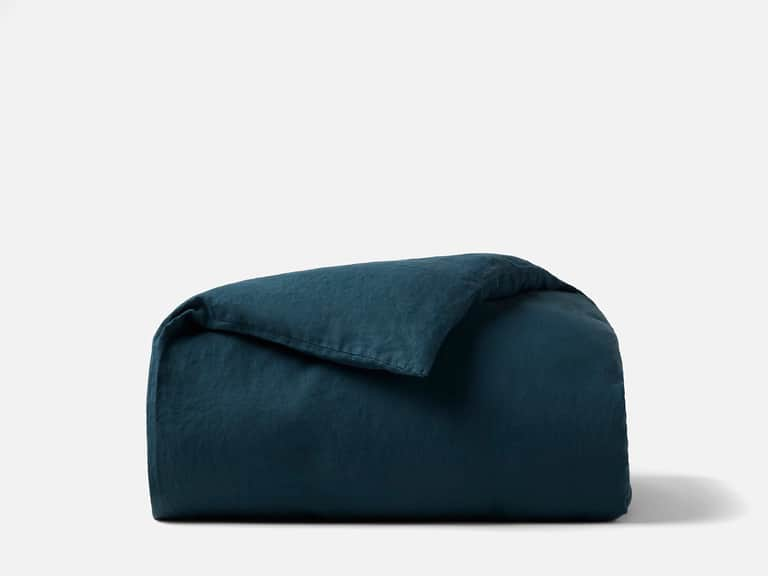
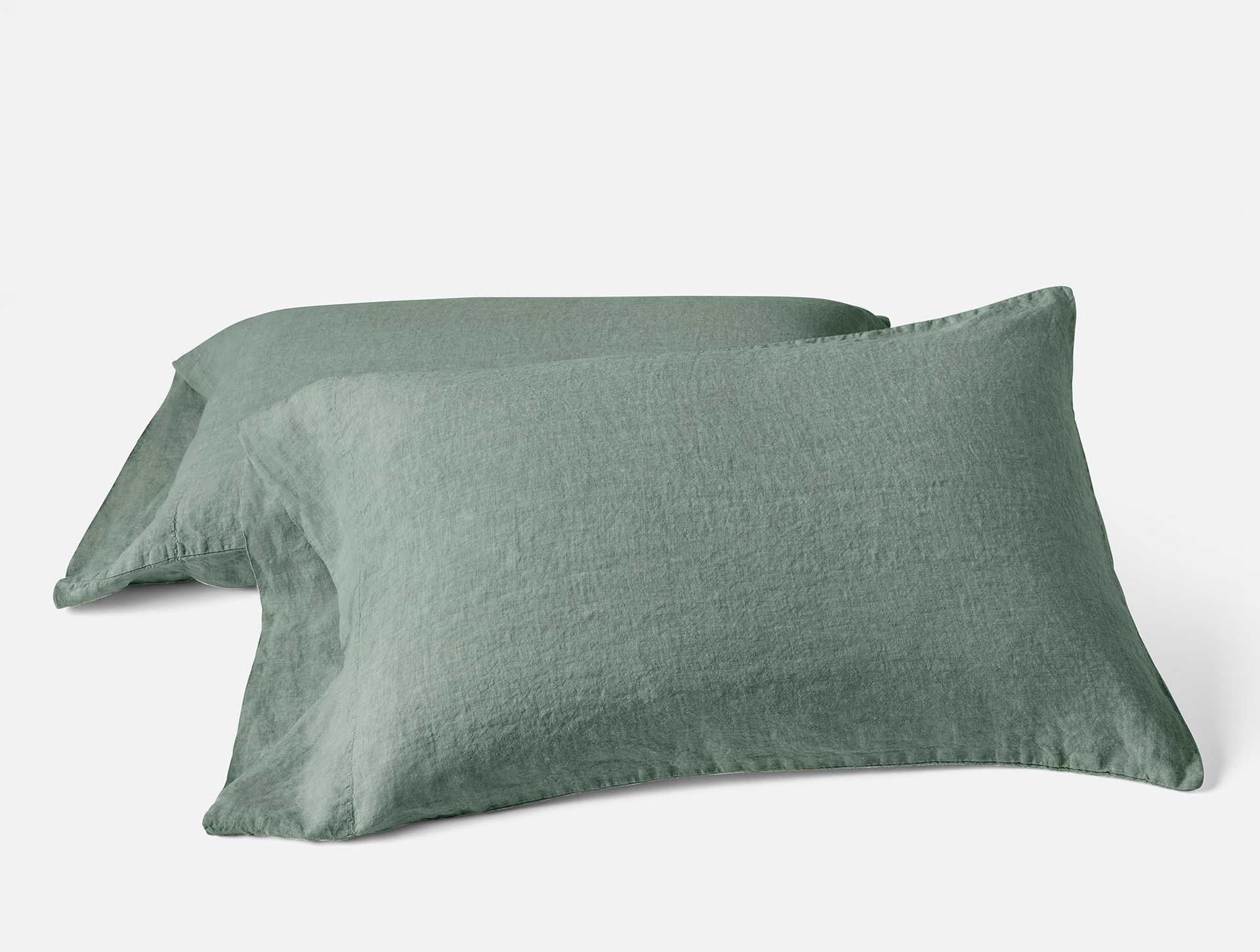
Colour and finish also deserve consideration. The Naturepedic listing names several colour options, while the fabric is described as stone-washed and made from certified organic flax. Treatments and finishing can influence the textile’s initial feel and appearance. For specific claims about dyes, finishes, or chemical restrictions, consult the current product documentation rather than inferring details from the words “linen” or “organic.”
Linen sheet care, without the mystery
Good care begins with the instructions attached to the product, not with a universal rule about linen. Naturepedic’s listed guidance is to machine wash warm, tumble dry low, warm iron if desired, and avoid bleach. Other linen products may call for cold water or a gentle cycle, so instructions for one brand or collection should not be transferred automatically to another.
Before laundering, check the sheet’s care label and sort it by colour and fabric type. Avoid overloading the washer: textiles need room to move through the water, and a crowded drum can increase friction and leave items less clean. Use an appropriate amount of detergent, since more soap is not necessarily more effective. Bleach is specifically discouraged in the supplied care guidance; when in doubt, do not substitute a whitening treatment without checking that it is suitable for the fabric and the manufacturer’s instructions.
Low tumble-dry heat is the stated recommendation. Removing sheets promptly can help limit the set of creases that forms when damp fabric sits compressed. Linen naturally has a relaxed, irregular look, so ironing is a matter of preference rather than a requirement for a presentable bed. If you choose to iron, follow the product guidance and test your approach on an inconspicuous area when you have a reason to be cautious.
Frequent washing is not a contest, and more aggressive laundering is not a reliable route to softness. Let practical use guide the schedule, and treat stains promptly according to the label and the nature of the mark. Harsh chemicals, high heat, and careless handling may put unnecessary stress on textile fibres. A steady, moderate routine is generally more useful than elaborate rituals that are difficult to sustain.
Care also has a resource dimension. Washing full loads when appropriate, using the recommended temperature, and avoiding unnecessary re-washing can reduce needless energy and water use. Those choices do not erase the environmental costs of making and transporting bedding, but they can be part of a sensible approach to keeping a textile in service.
A practical way to assess an organic linen sheet
When comparing linen bedding, it helps to move through the information in a calm order. Start with the material: is the item linen, a blend, or another fibre altogether? Then look for the stated origin of the flax and the locations of later manufacturing stages. These answers are related, but they are not interchangeable.
Next, consider the certification. Identify the standard, check whether it applies to the finished product or another part of production, and look for current documentation where available. A certification can support a defined claim about sourcing and processing; it should not be asked to answer questions outside its scope.
Then turn to the practical specifications: fabric weight, set contents, dimensions, pocket depth, and care instructions. Ask whether those details suit your mattress, climate, preferences, and laundry routine. Finally, consider the claims you cannot verify from a short description. If information about a finish, production stage, or certification scope matters to you, look for a source that addresses it directly.
- Fibre: Check whether the product is 100% linen and whether the flax is described as organic.
- Origin: Separate the stated growing region from the locations where the fabric is made and finished.
- Certification: Read GOTS as a defined standard with a particular scope, not as a guarantee of every performance or environmental claim.
- Fit: Compare the fitted-sheet pocket depth with the full thickness of your mattress and topper.
- Care: Follow the instructions for the exact item, especially regarding water temperature, drying, and bleach.
The value of a careful label
The appeal of linen can be immediate: the texture, the ease of an unpressed bed, the sense that a natural fibre has brought a little of the outside world indoors. But a label earns its place by being more precise than atmosphere. For Naturepedic’s organic linen sheets, the useful details include French-grown flax, GOTS certification, a stated manufacturing location, a fabric weight of 185 gsm, a 15-inch fitted-sheet pocket, and clear laundering guidance.
Taken together, those specifications make a stronger guide than any single adjective. They help explain how the sheets are described, where key stages occur, and what a buyer should check before laundering or putting them on a mattress. They do not predict exactly how the cloth will feel to every sleeper, nor do they settle every question about the environmental life of a textile. That is the honest limit of a product description—and also the reason to read one closely.
A bedsheet, after all, is a daily object. Its significance lies partly in the fields and facilities behind it, and partly in the ordinary business of fitting a mattress, washing a load, and making a bed again. Certification and sourcing offer a way to ask better questions about the first part of that story. Construction and care help with the second.